
Compreendendo o NARS1: como a levedura pode ajudar a desvendar os mistérios do transtorno NARS1
Quando se trata de entender condições genéticas raras, como o transtorno NARS1, cada nova pesquisa nos deixa um passo mais perto de respostas e, quem sabe, um dia, de tratamentos.
Um estudo recente de Professor Antony Antonellis’ laboratório conduzido por Sheila Peeples deu um emocionante passo à frente. Embora possa parecer incomum, este trabalho usa levedura (sim, o mesmo tipo usado na panificação!) para ajudar os cientistas a entender como as mudanças no gene NARS1 afetam o corpo.
Por que estudar levedura?
Pode parecer estranho que algo tão pequeno como o fermento possa ensinar-nos sobre uma condição humana. Mas a levedura na verdade compartilha muitas semelhanças com nossas próprias células e cresce rapidamente, o que a torna ideal para estudar como os genes funcionam.
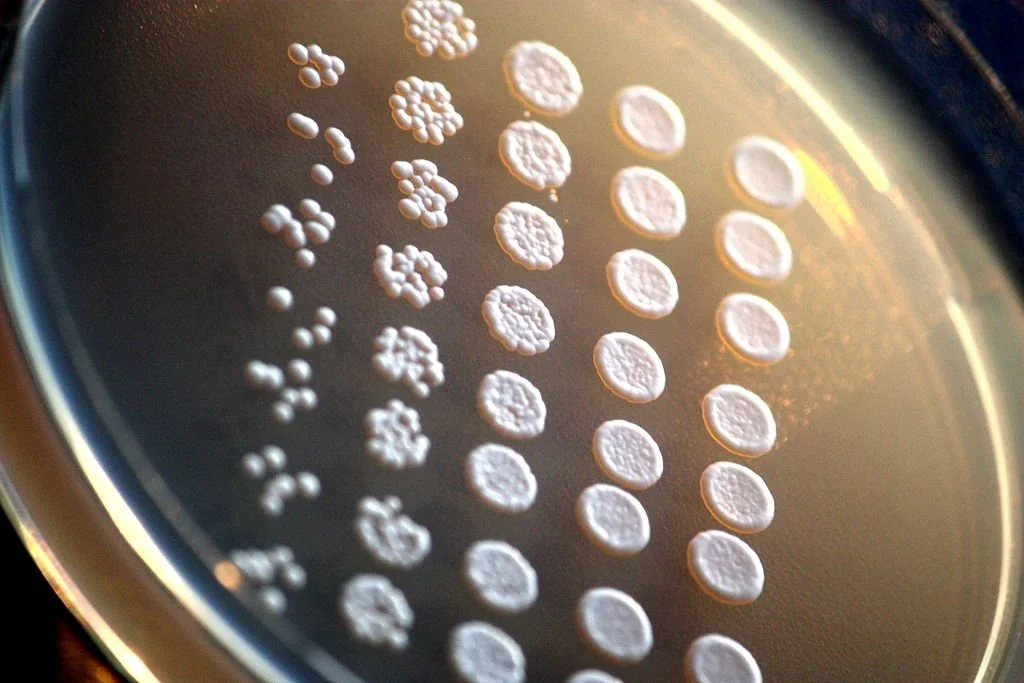
Inoculação gota a gota de mutantes de levedura de panificação de laboratório (Saccharomyces cerevisiae) em placa de ágar. Por Rainis Venta (Trabalho próprio) [CC BY-SA 3.0], via Wikimedia Commons
_agariplaadil..JPG)
Neste estudo, os pesquisadores queriam ver o que acontece quando o gene NARS1 não funciona como deveria. O gene NARS1 produz uma proteína essencial para a vida. Na levedura, assim como nos humanos, se esse gene for removido, a levedura não conseguirá sobreviver.
No entanto, os cientistas podem “resgatar” a levedura adicionando uma versão humana do gene NARS1, permitindo que ela viva e cresça novamente. Esta abordagem inteligente significa que eles podem trocar diferentes variantes (ou mutações) do gene humano NARS1 para ver como cada um afeta a capacidade de sobrevivência da levedura.
Se a levedura cresce normalmente, a variante não parece causar danos. Mas se o crescimento abrandar ou parar, isso sugere que a variante danifica a função da proteína NARS1, algo que os cientistas chamam de perda de função.
O que a pesquisa analisou
Existem diferentes tipos de variantes do NARS1 que podem causar problemas de saúde.
Algumas causas Transtorno NARS1, que pode afetar o desenvolvimento e o cérebro. Outros causam uma condição diferente chamada Doença de Charcot-Marie-Tooth (CMT), que tende a afetar os nervos das mãos e dos pés, levando à fraqueza muscular, pés arqueados e redução da sensibilidade.
Embora ambas as condições sejam causadas por variantes no mesmo gene, os sintomas e a sua gravidade são muito diferentes.
Neste estudo, a equipe comparou diversas variantes do NARS1, incluindo aquelas ligadas ao transtorno NARS1 e ao CMT, para entender como cada uma afeta a atividade do gene.
O que a pesquisa descobriu
Os resultados foram claros e estão alinhados com pesquisas anteriores:
Perda de Função (LOF): Seis das sete variantes testadas (tanto o transtorno NARS1 quanto o CMT) fizeram com que a levedura tivesse dificuldades e crescesse mal. Isso confirmou que as variantes causam a perda de atividade do NARS1.
Efeito dominante negativo: Quando os pesquisadores combinaram uma saúde NARS1 cópia com uma cópia mutada, o gene saudável não conseguiu compensar. A cópia mutada foi dominante, o que significa que interferiu ativamente na proteína NARS1 saudável. Isto é o que os cientistas chamam de efeito dominante negativo.
A gravidade importa: Crucialmente, as variantes que causam o distúrbio NARS1 tiveram um maior efeito negativo (tóxico) na levedura do que as variantes que causam CMT. Isto sugere uma ligação direta: quanto maior a perda da atividade do NARS1, mais grave será o resultado da doença.
Por que essa pesquisa é importante para as famílias NARS1?
Este estudo representa um enorme avanço no Cuidado e Mudar nós lutamos por.
1. Temos uma base mais forte: A ciência fica mais forte quando diferentes laboratórios encontram os mesmos resultados usando modelos diferentes. Esta pesquisa confirma o que um estudo anterior sugeriu: agora temos provas independentes e consolidadas do mecanismo do transtorno NARS1. Esta base sólida é fundamental quando avançamos no lançamento de ensaios clínicos.
2. Temos uma nova ferramenta para testar tratamentos: A levedura é um modelo altamente eficaz para testes de drogas, os cientistas a chamam de "drogável" Como os pesquisadores refletiram com sucesso a gravidade da doença em leveduras, eles agora têm um modelo rápido e acessível, pronto para testar possíveis medicamentos, como a asparagina. Este modelo aproxima-nos de encontrar um caminho para o tratamento antes de investirmos em modelos mais complexos e caros.
O que acontece depois?
Este estudo é a base proposital para a próxima onda de descobertas. O modelo do laboratório Antonellis é agora um poderoso ponto de partida.
Nossos próximos passos, juntamente com nossos parceiros de pesquisa, são:
Traduza essas descobertas para modelos mais complexos, incluindo linhas celulares humanas e, eventualmente, organismos inteiros, como camundongos.
Teste possíveis terapias, para ver se podemos restaurar a função do NARS1 e reverter o efeito dominante negativo.
Defendemos a pesquisa isso cria esse roteiro do laboratório para os tratamentos. Cada família que apoia nossa missão ajuda a construir esse roteiro.